
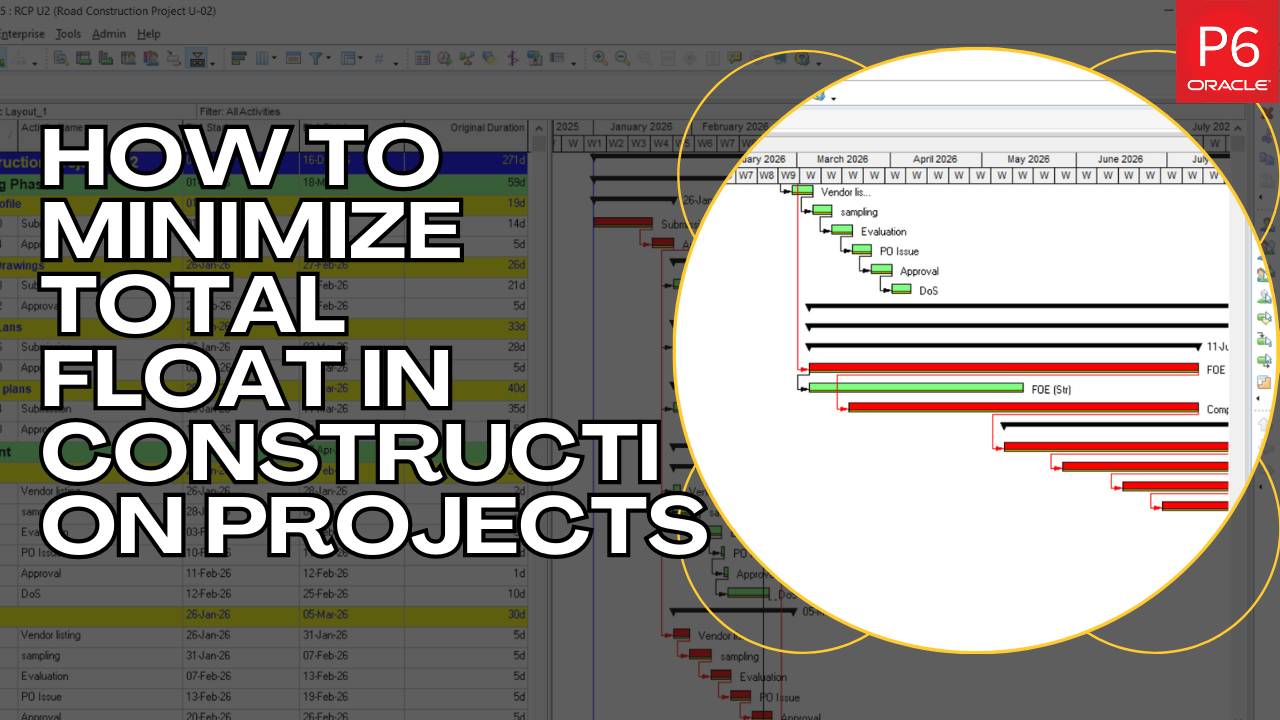
In construction scheduling, Total Float often reveals more about the quality of a schedule than the activities themselves. When float values are excessively high, it typically signals weak logic ties, unrealistic sequencing, or gaps in dependency planning. On the other hand, a well-optimized schedule keeps float within reasonable limits and reflects how work will truly unfold on site.
In this guide, we’ll discuss what total float is and why it matters, 4 ways to reduce total float in CPM, and keep your project on track.
What Is Total Float in CPM Scheduling?
In the Critical Path Method (CPM), total float is the amount of time an activity can slip without affecting the project’s completion date. While some float is normal and even healthy, excessive float may indicate:
- Missing predecessor or successor links
- Improper relationship types
- Overly broad activity durations
- Lack of realistic sequencing
- Inadequate coordination between trades
Many industry reviewers, including the Defense Contract Management Agency (DCMA), analyze float levels when evaluating baseline schedules. High float values often raise concerns about schedule integrity and completeness of logic. This is especially important in EPC projects, where engineering, procurement, and construction must move in synchronized phases. In our EPC Planning Course, we highlight how uncontrolled float between design approvals, material procurement, and site execution can create hidden risks that later disrupt commissioning milestones.
Want to Learn More About EPC Scheduling!
Here’s our detailed guide on fertilizer plant EPC scheduling secrets
Why Excessive Float Is a Red Flag In Construction Projects?
When activities show 60, 90, or even 120 days of float in a fast-paced construction project, that flexibility is rarely realistic. In real site conditions:
- Work areas are limited
- Trades depend on each other
- Equipment access is restricted
- Inspections create checkpoints
- Material deliveries follow sequences
If the schedule suggests that many activities can shift freely without impact, it likely does not represent the true execution strategy. Moreover, in high-pressure environments like plant shutdowns or turnarounds, excessive float can be even more dangerous. Through our Plant Shutdown Management course, you can learn to properly compress logic, remove artificial float, and align activities with operational constraints.
Minimizing float enhances:
- Transparency in critical path identification
- Risk visibility
- Resource allocation accuracy
- Credibility during consultant review
4 Best Methods to Reduce Total Float in CPM
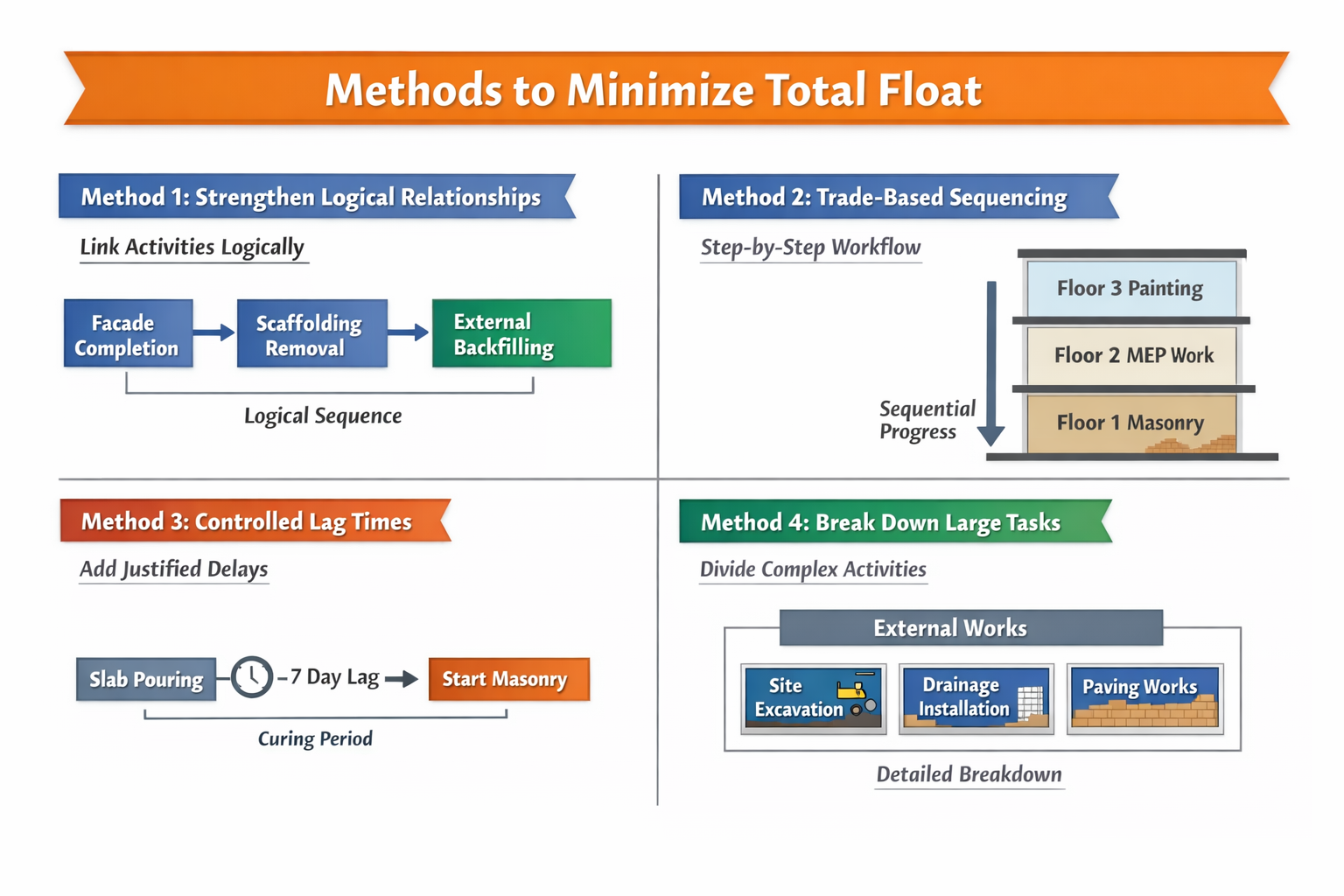
Below are proven, practical techniques used by professional planners to control and reduce total float in construction projects:
Method 1: Strengthen Logical Relationships Between Activities
The most effective way to reduce unnecessary float is by improving activity logic.
Replace “Open-Ended” Tasks
Activities without predecessors or successors create artificial flexibility. Every construction activity should logically connect to:
- What must finish before it starts
- What depends on it afterward
For example, instead of allowing external works to start at project commencement, link them to:
- Completion of façade works
- Removal of scaffolding
- Site access availability
This ensures that site-driven constraints control timing rather than arbitrary early start dates.
Method 2: Use Realistic Activity Sequencing by Trade
Construction rarely happens simultaneously across all areas. Most projects follow trade flow patterns:
- Structure precedes envelope
- Envelope precedes finishes
- Finishes precede commissioning
Aligning activities with practical trade flow naturally reduces float.
Floor-by-Floor Progression
Rather than allowing masonry, plaster, or MEP installations to occur on all floors at once, stagger them logically. Sequential trade movement reflects:
- Crew availability
- Access limitations
- Safety constraints
- Equipment allocation
When work flows vertically or horizontally in a controlled manner, float levels stabilize and better reflect site reality.
Method 3: Introduce Controlled Lag
Lag should never replace proper logic, but when applied carefully, it can model real-world delays between activities.
A lag represents a deliberate waiting period between linked tasks. Examples include:
- Concrete curing periods
- Material drying times
- Inspection waiting periods
- Crew mobilization intervals
For example, after slab casting, masonry cannot begin immediately due to curing requirements. Introducing a realistic lag model tightens schedule accuracy. However, always confirm contract compliance before using lag. Some clients limit lag duration or require clear justification.
Method 4: Break Down Overly Broad Activities
Large, long-duration tasks often produce inflated float values. For example:
- “Internal Finishes – 90 Days”
- “External Works – 120 Days”
Such generalized activities reduce visibility and increase artificial flexibility. Instead:
- Divide work by zone
- Separate by floor
- Split by trade scope
Granular activities improve dependency tracking and make the critical path more transparent.
Final Thoughts
Minimizing total float in construction projects is less about compression and more about logic refinement. By strengthening activity relationships, sequencing work realistically, introducing justified lag, and aligning scheduling with actual site methodology, planners create programs that reflect execution strategy.
In this guide, we’ve covered what total float is, why excessive float indicates risks, and 4 practical methods to reduce it.
In short, when float aligns with actual site conditions, the schedule becomes a proactive management tool rather than just a planning document. Teams gain better visibility into risks, more transparent decision-making, and stronger control over project delivery.