
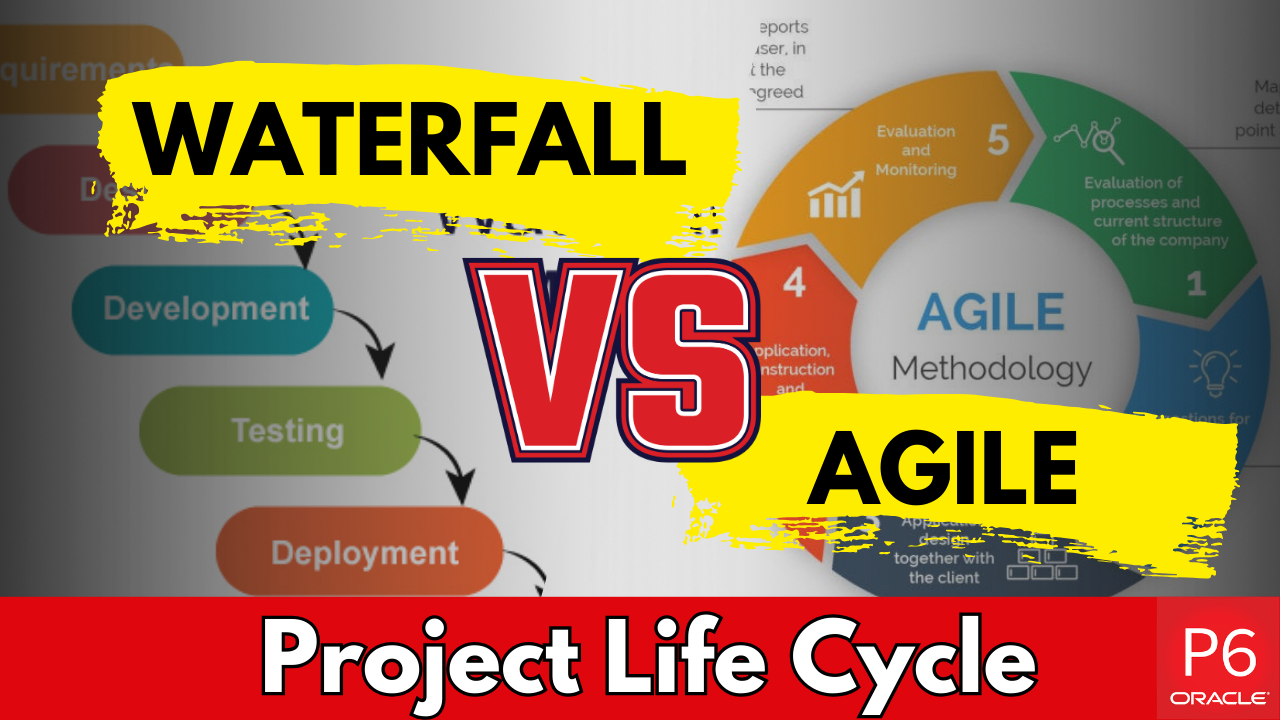
Choosing the right project management approach can make or break your success. When comparing Waterfall vs Agile in the project life cycle, the real difference lies in flexibility, structure, and how teams handle change. Therefore, understanding how these two methodologies shape planning, execution, and delivery can help you decide which one fits your business strategy.
In this blog post, we’ll discuss the key differences, advantages, and disadvantages of Waterfall vs Agile to help you choose the best approach for your project.
What Is Agile Project Management?
Agile project management is a flexible, iterative approach to managing projects in which work is delivered in small, manageable increments. Instead of building everything at once, teams release parts of the product regularly and improve them based on real customer feedback. This ongoing cycle of planning, building, testing, and refining helps teams move faster and adapt quickly to change.
While Agile is commonly associated with software development, its principles are increasingly relevant in engineering and industrial projects as well. Professionals who enroll in EPC planning benefit from understanding Agile concepts, as they improve coordination, adaptability, and real-time decision-making.
What Is Waterfall Project Management?
Waterfall project management follows a structured, step-by-step process. Each phase, such as planning, design, development, testing, and deployment, must be completed and approved before the next one begins. The workflow moves in a straight line, making it easy to manage when project requirements are clear.
This structured approach closely aligns with high-risk industrial operations. In turnaround and maintenance environments, precision planning is non-negotiable. Through our Plant Shutdown Management Course, we guide professionals on building detailed shutdown schedules and managing risk using phase-based planning methods.
Want to Learn More Details About Project Life Cycle!
Here’s our detailed guide on waterfall vs agile project life cycle analysis
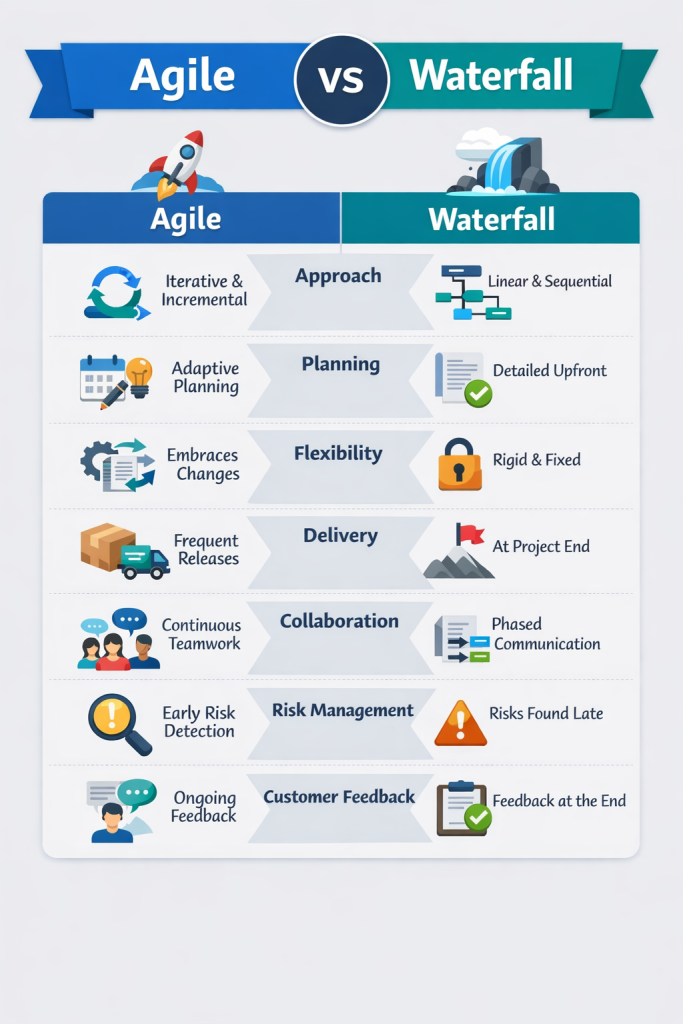
Agile vs Waterfall Comparison Table
To better understand the key differences between these two approaches, here’s a quick comparison table showing Agile and Waterfall methodologies:
Agile vs Waterfall Pros and Cons
Both Agile and Waterfall can deliver strong results, but each comes with its own risks and limitations. Below, we outline the pros and cons to help you decide which approach best aligns with your project goals, timeline, and requirements.
Agile Pros
- Easily adapts to changing requirements and priorities
- Delivers working software faster through incremental releases
- Encourages strong collaboration and team transparency
- Promotes continuous improvement with regular reviews
Agile Cons
- Harder to predict final costs and timelines
- Requires ongoing stakeholder involvement
- Higher risk of scope creep without strict prioritization
- Documentation may be lighter compared to traditional models
Waterfall Pros
- Clear structure with defined phases and documentation
- Easier to estimate the budget and timeline upfront
- Works well for projects with fixed, stable requirements
- Simple to manage due to its step-by-step approach
Waterfall Cons
- Difficult to accommodate changes once development begins
- Feedback comes late in the process
- Higher risk of costly rework if issues are discovered late
- Less flexibility compared to iterative approaches
How Should You Choose the Right Project Methodology?
Are you confused about choosing between waterfall vs agile project management? Review the scenarios below and select the one that best aligns with your goals:
When Should You Choose Agile?
- Your requirements are likely to evolve after stakeholders see working prototypes
- You can release features in smaller cycles and gather feedback frequently
- Fast feedback and adaptability matter more than rigid upfront planning
- You’re willing to adjust the scope to meet deadlines or business goals
- Your team is stable, collaborative, and cross-functional
When Waterfall Is the Better Fit?
- Your project scope is well-defined and unlikely to shift
- Tasks must follow a structured, step-by-step sequence
- You require formal approvals, compliance checks, or contract milestones
- Making changes late in the process would be costly or disruptive
- Budget and scope need to be finalized from the start
Situations That Require a Hybrid Approach
- Certain elements (like regulatory requirements or launch deadlines) are fixed, but other areas require flexibility
- Governance demands phase approvals, yet teams can iterate within those phases
- Different teams face varying levels of uncertainty and dependencies
- Leadership expects milestone tracking alongside incremental progress
Conclusion
Agile vs Waterfall project management offer effective ways to deliver successful projects, but the right choice depends on your specific goals, constraints, and working environment.
In this blog, we explored what Agile project management is and the structured, phase-based nature of Waterfall project management. Through a comparison table, a breakdown of pros and cons, and practical scenarios for choosing each method.
By understanding these methodologies, you can make more confident project decisions, reduce risks, and improve overall outcomes.